Mental Health Counseling–Depression Management

How to Manage Depression
Depression management therapy helps people feel better when they’re feeling very sad for a long time. This type of therapy uses several different methods to reduce depression symptoms and stop them from coming back.
What happens in depression management therapy?
Changing how you think
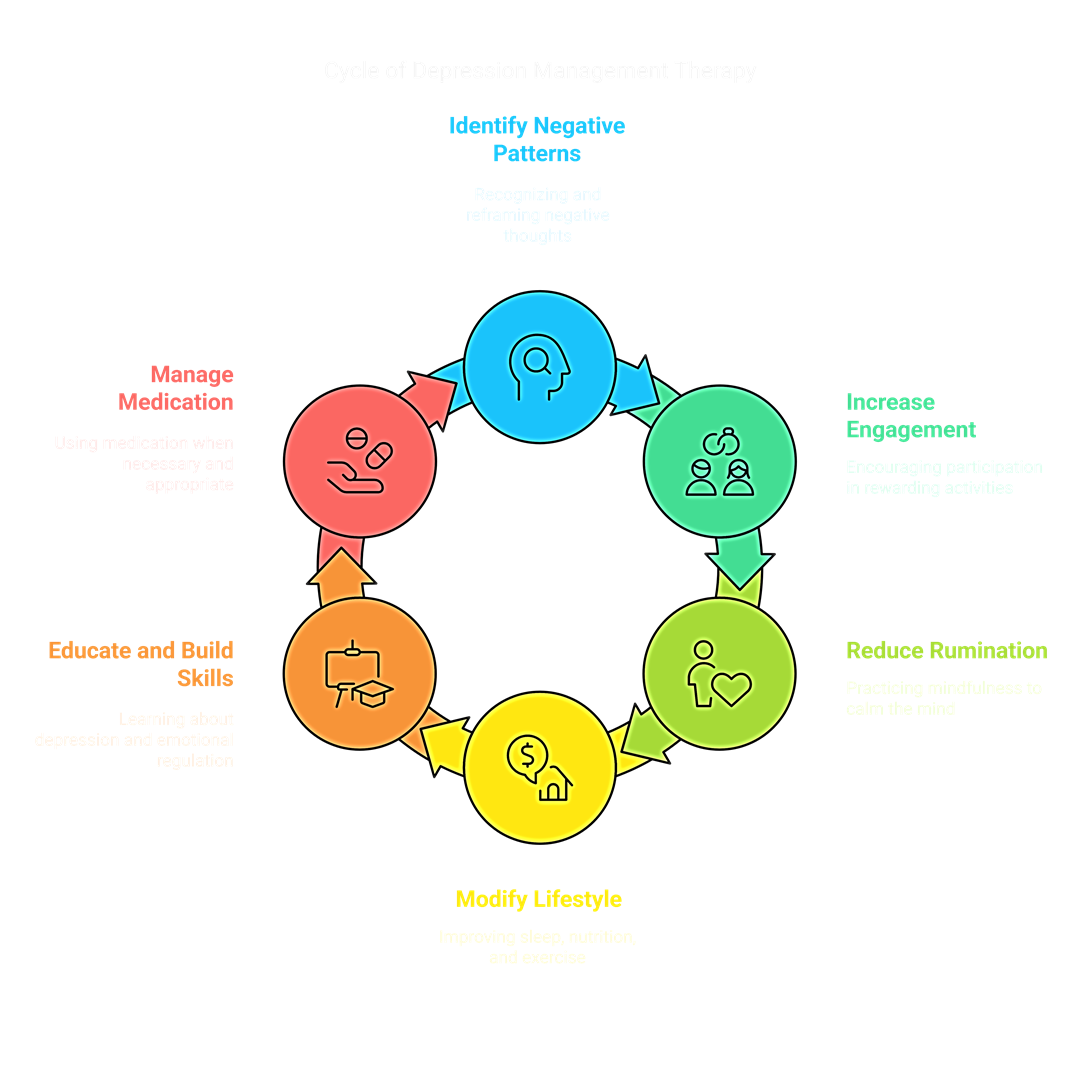
Depression often makes people think in very negative ways. In therapy, you learn to notice these negative thoughts and change them to be more helpful and realistic. For example, if you think “I’ll never get better,” you might learn to replace that with “I’m having a hard time right now, but I can take small steps toward feeling better.”
Getting active again
Depression often makes people stop doing things they used to enjoy. In therapy, you work on slowly getting back to activities that make you feel good or give you a sense of accomplishment. Even small activities like taking a short walk or calling a friend can help your mood improve.
Learning to be in the present moment
People with depression often spend a lot of time thinking about sad things from the past or worrying about the future. Mindfulness teaches you how to focus on the present moment instead of getting caught in these unhelpful thought patterns.
Taking care of your body
Depression affects both your mind and body. That’s why therapy often includes making changes to help you:
-Sleep better at night
-Eat healthier foods
-Get some exercise, even if it’s just a little bit each day
Understanding depression
Learning about how depression works helps you recognize what’s happening in your brain and body. This knowledge makes it easier to manage your symptoms and not blame yourself.
Building emotional skills
In therapy, you learn ways to handle difficult emotions without being overwhelmed by them. These skills help you both during depression and after you start feeling better.
Medication (sometimes)
For some people, the therapist might suggest talking to a doctor about medication that can help with depression symptoms. This works alongside the other parts of therapy.
Types of depression therapy
There are several proven approaches to treating depression, including:
-Cognitive Behavioral Therapy (CBT), which focuses on changing thinking patterns
-Acceptance and Commitment Therapy (ACT), which helps you accept difficult feelings while still taking positive actions
-Interpersonal Therapy, which helps improve your relationships with others
The goal of depression management
The main purpose of depression management is to help you feel better now while also giving you tools to stay emotionally healthy in the future. You learn skills that can prevent depression from coming back or help you manage it more effectively if it does return.
Call to make an appointment with one of our therapists: (928) 641-8131
Read about the latest depression research.
Latest Posts:
- Mental Health Counseling–Anxiety Management
- Mental Health Counseling–Substance Abuse
- Mental Health Counseling–PTSD (Post Traumatic Stress Disorder)
- Mental Health Counseling–EMDR Therapy
- Mental Health Counseling–Dialectical Behavioral Therapy
 Mariposa Counseling Services LLC