Mental Health Counseling–Dialectical Behavioral Therapy

What is Dialectical Behavior Therapy (DBT)?
Dialectical Behavior Therapy (DBT) is a special kind of therapy that helps people manage strong emotions and improve their relationships. The word “dialectical” means balancing two ideas that seem opposite – in DBT, this means accepting yourself while also working to change.
Who uses DBT?
DBT was first created to help people with borderline personality disorder, but now it helps many people who struggle with controlling their emotions, including those with:
-Depression
-Anxiety
-Eating disorders
-Substance use problems
-Self-harm behaviors
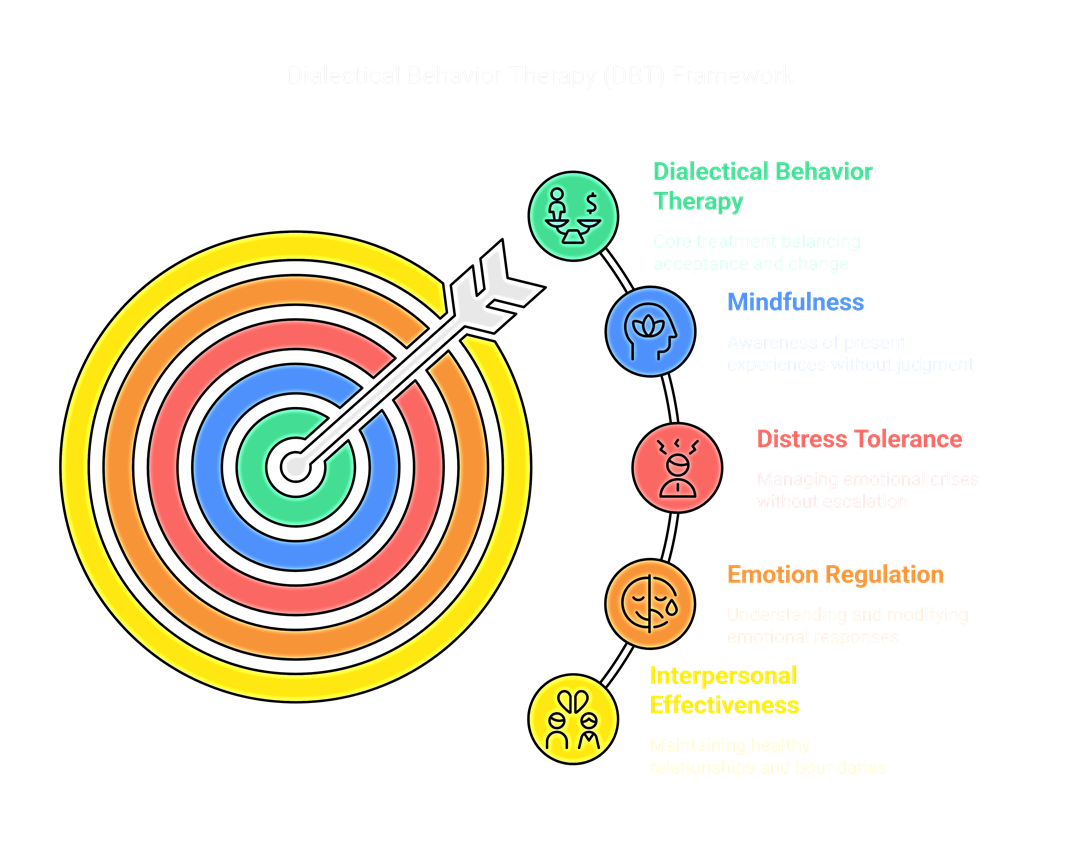
The four main skills in DBT
1. Mindfulness
Mindfulness teaches you to pay attention to what’s happening right now without judging it as “good” or “bad.” It’s like learning to be a friendly observer of your own thoughts and feelings.
For example, instead of thinking “I’m having the worst day ever!” you might notice “I’m feeling frustrated right now, and that’s okay.”
2. Distress Tolerance
These skills help you get through difficult situations without making them worse. It’s like learning what to do when your emotions feel like a storm.
For instance, if you’re very upset, you might:
-Hold an ice cube in your hand to focus on a different sensation
-Count backward from 100
-Take a short walk
-Practice deep breathing
3. Emotion Regulation
These skills help you understand, experience, and change your emotions. You learn:
-How emotions work in your body and mind
-How to identify what you’re feeling
-Ways to reduce painful emotions
-How to increase positive emotions
4. Interpersonal Effectiveness
These skills help you communicate better with others. You learn how to:
-Ask for what you need
-Say no when necessary
-Keep your self-respect during conflicts
-Keep relationships healthy while still respecting your own boundaries
How DBT therapy works
A full DBT program usually includes:
Individual therapy – Meeting one-on-one with a therapist who helps you apply DBT skills to your specific problems
Skills training groups – Learning DBT skills with other people in a class-like setting
Phone coaching – Getting help from your therapist between sessions when you’re facing a crisis
Therapist consultation team – Your therapist meets with other DBT therapists to make sure they’re providing the best care
The special DBT balance
The most important idea in DBT is the balance between two things that seem opposite:
-Accepting yourself exactly as you are right now
-Working to change behaviors that cause problems in your life
This balance helps people stop seeing things as all-or-nothing and find a middle path forward. For example, you can think “I’m doing the best I can AND I can learn to do better.”
Call to make an appointment with one of our therapists: (928) 641-8131
Read about the latest DBT research
Latest Posts:
- Mental Health Counseling–Anxiety Management
- Mental Health Counseling–Substance Abuse
- Mental Health Counseling–PTSD (Post Traumatic Stress Disorder)
- Mental Health Counseling–EMDR Therapy
- Mental Health Counseling–Dialectical Behavioral Therapy
 Mariposa Counseling Services LLC