Mental Health Counseling–EMDR Therapy

Understanding EMDR Therapy
EMDR therapy (which stands for Eye Movement Desensitization and Reprocessing) is a special kind of therapy that helps people heal from difficult or scary experiences that continue to bother them. Let’s explore how this therapy works and how it helps people feel better.
What is EMDR and how does it work?
When something scary or upsetting happens to us, our brains sometimes get “stuck” on the memory. In EMDR therapy, a trained therapist helps the brain “unstick” these memories so they don’t feel so painful anymore.
During EMDR, you think about the difficult memory while your eyes follow the therapist’s fingers moving back and forth, or while you listen to sounds that alternate between your left and right ears, or feel gentle taps on your hands or knees that go back and forth. This back-and-forth movement is called “bilateral stimulation.”
Doing these two things at once – thinking about the memory while experiencing the bilateral stimulation – helps your brain process the memory in a new way. It’s like your brain is saying, “I can think about this memory now and still be okay.”
Many people notice that after EMDR, the memory doesn’t go away, but it doesn’t feel as upsetting or overwhelming anymore. It starts to feel more like a regular memory rather than something that can still hurt you.
The eight steps of EMDR therapy
EMDR follows eight important steps:
- History-taking: The therapist learns about your past experiences and what’s bothering you now.
- Preparation: The therapist teaches you ways to feel calm and safe, like deep breathing or imagining a peaceful place.
- Assessment: You identify specific memories to work on and describe how they make you feel.
- Desensitization: This is when you focus on the memory while doing the eye movements or other bilateral stimulation. During this step, your feelings about the memory often begin to change.
- Installation: The therapist helps you connect positive thoughts to the memory, like “I am safe now” or “I can handle this.”
- Body scan: You notice if there are any uncomfortable feelings still in your body when you think about the memory.
- Closure: The therapist makes sure you feel okay at the end of each session, even if the work isn’t finished yet.
- Reevaluation: At the beginning of the next session, the therapist checks how you’re feeling about the memories you worked on before.
What can EMDR help with?
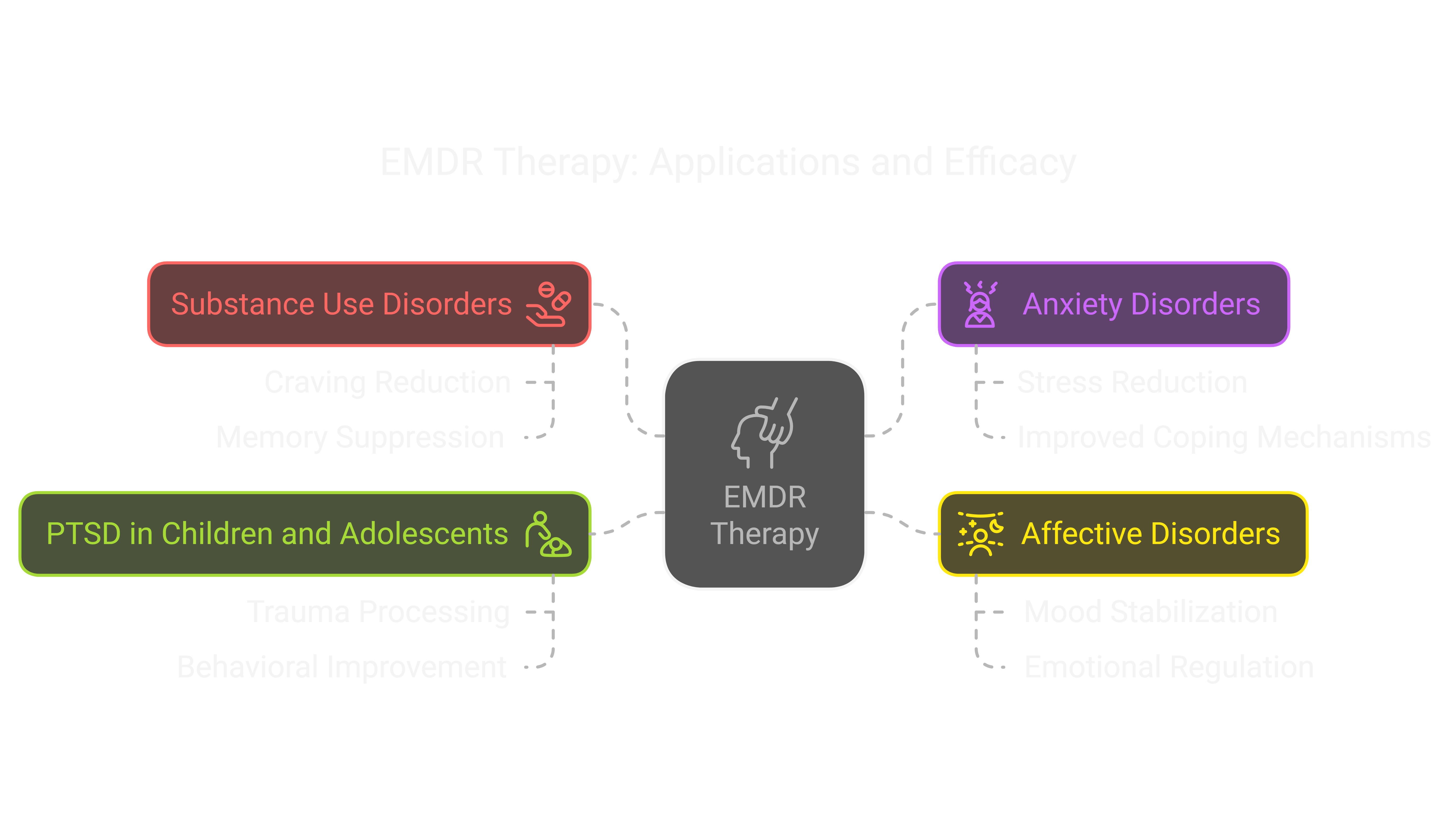
EMDR was first created to help people with PTSD (Post-Traumatic Stress Disorder), which happens after very scary or dangerous experiences. But now therapists use EMDR to help with many other problems, including:
- Feeling worried or anxious a lot of the time
- Feeling sad or depressed
- Being very afraid of specific things (phobias)
- Having unwanted thoughts that keep coming back
- Feeling bad about yourself
How well does EMDR work?
Research shows that EMDR helps many people feel better, often with fewer therapy sessions than other types of therapy might need. Many people notice changes within a few sessions, though the number of sessions needed depends on each person’s situation.
EMDR doesn’t erase memories, but it helps change how those memories make you feel. After EMDR, many people can think about difficult past experiences without feeling overwhelmed or upset like they used to.
The goal of EMDR is to help you process past experiences in a way that lets you move forward in your life feeling stronger and more peaceful.
Call to make an appointment with one of our therapists: (928) 641-8131
Read about the latest EMDR research
Latest Posts:
- Mental Health Counseling–Anxiety Management
- Mental Health Counseling–Substance Abuse
- Mental Health Counseling–PTSD (Post Traumatic Stress Disorder)
- Mental Health Counseling–EMDR Therapy
- Mental Health Counseling–Dialectical Behavioral Therapy
 Mariposa Counseling Services LLC