Mental Health Counseling–PTSD (Post Traumatic Stress Disorder)

PTSD and How Therapy Helps
PTSD (Post-Traumatic Stress Disorder) happens when someone has gone through a scary, dangerous, or shocking event and continues to feel stressed or afraid even when they’re safe. PTSD therapy helps people recover from these traumatic experiences using methods that have been proven to work.
What happens in PTSD therapy?
Learning about trauma reactions
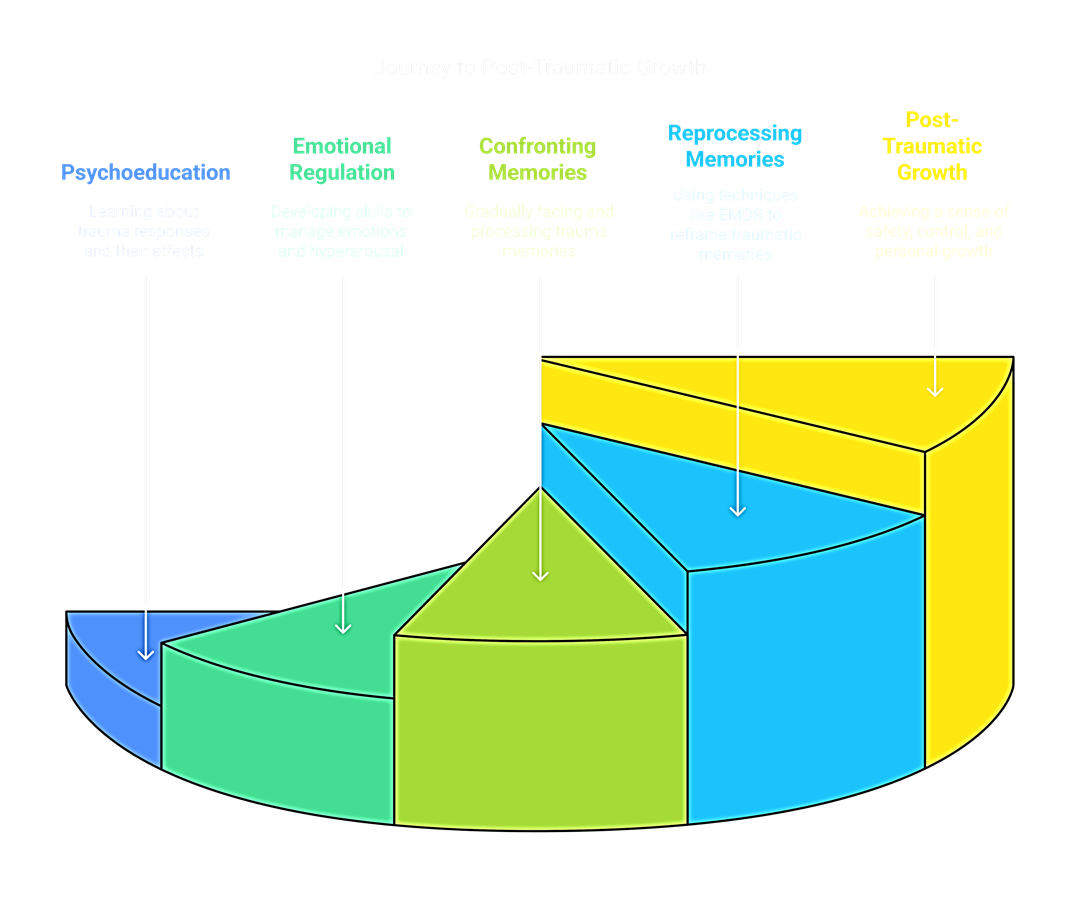
First, people learn why their bodies and minds react the way they do after trauma. This helps them understand that their reactions make sense and aren’t their fault. For example, someone might learn that being easily startled is their body’s natural way of trying to keep them safe.
Different types of therapy approaches
Cognitive Processing Therapy (CPT)
This type of therapy helps people identify and change unhelpful thoughts about their trauma. For example, someone might believe “The bad thing that happened was my fault” or “I can never be safe again.” In CPT, they learn to question these thoughts and develop more balanced beliefs.
Prolonged Exposure (PE)
In this therapy, people slowly and safely face their trauma memories and things that remind them of the trauma. At first, thinking about the trauma might feel overwhelming, but with practice and support, the memories gradually become less powerful. It’s like slowly turning down the volume on a scary song until it doesn’t feel so scary anymore.
EMDR (Eye Movement Desensitization and Reprocessing)
This special therapy has people focus on their trauma memory while following the therapist’s hand movements with their eyes or listening to sounds that alternate between their left and right ears. This helps the brain process the trauma differently. Many people find that after EMDR, their trauma memories feel more distant and less upsetting.
Learning coping skills
PTSD therapy also teaches important skills like:
- Ways to calm down when feeling anxious or panicky
- How to handle strong emotions without being overwhelmed
- How to face situations that feel scary but are actually safe
- Better ways to sleep when nightmares or worries keep you awake
Goals of PTSD therapy
The main goals of PTSD therapy are to:
- Help process trauma memories so they don’t feel as powerful or upsetting
- Restore feelings of safety and control in everyday life
- Reduce symptoms like nightmares, flashbacks, and being easily startled
- Help people move forward in their lives
Many people not only recover from PTSD but also experience what therapists call “post-traumatic growth.” This means they discover new strengths, deeper relationships, or a greater appreciation for life after working through their trauma.
Therapy doesn’t erase what happened, but it can help the trauma become just one part of someone’s life story rather than something that controls their life every day.
Call to make an appointment with one of our therapists: (928) 641-8131
Read about the latest PTSD research
Latest Posts:
- Mental Health Counseling–Anxiety Management
- Mental Health Counseling–Substance Abuse
- Mental Health Counseling–PTSD (Post Traumatic Stress Disorder)
- Mental Health Counseling–EMDR Therapy
- Mental Health Counseling–Dialectical Behavioral Therapy
 Mariposa Counseling Services LLC