Mental Health Counseling–Substance Abuse

Understanding Substance Abuse Counseling
Substance abuse counseling is a special type of therapy that helps people who are having problems with alcohol, drugs, or other substances. Let’s look at what this type of counseling involves and how it helps people recover.
What happens in substance abuse counseling?
Motivational interviewing
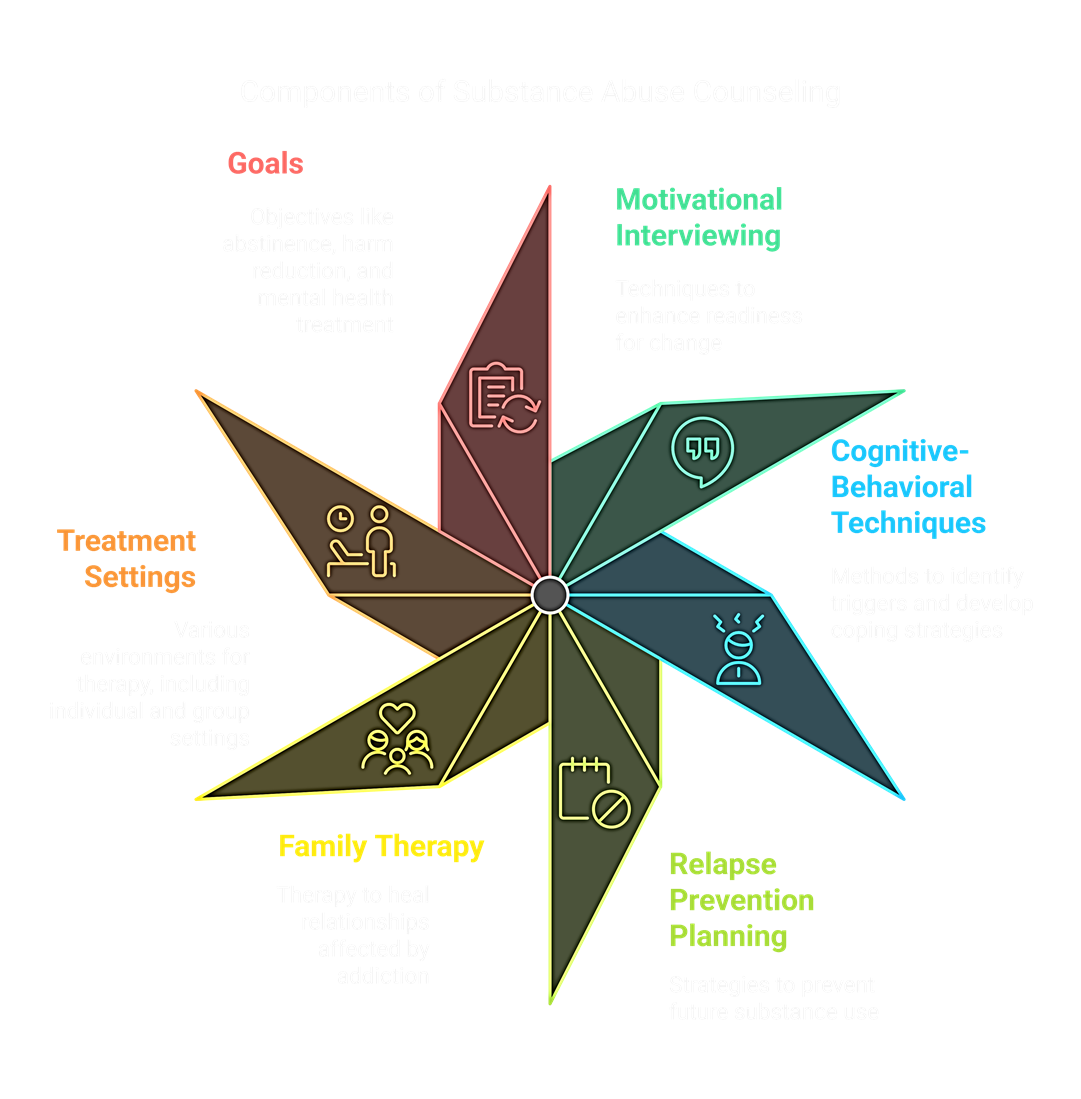
Counselors use a method called “motivational interviewing” to help people find their own reasons for wanting to change. Instead of telling someone they need to stop using substances, the counselor asks questions that help the person discover why changing might be important to them. This works better because people are more likely to stick with changes they want to make for themselves.
Learning about triggers and coping
People learn to identify their “triggers” – these are situations, feelings, people, or places that make them want to use substances. For example, someone might realize they always want to drink alcohol when they feel stressed or when they hang out with certain friends.
After identifying triggers, counselors help people develop new ways to handle these situations without using substances. For instance, someone might learn to take deep breaths when feeling stressed instead of reaching for a drink.
Planning to prevent relapse
“Relapse” means going back to using substances after trying to stop. In counseling, people make specific plans for what to do if they feel strong urges to use again. This might include:
- People to call for support
- Places to go that are substance-free
- Activities that help distract from cravings
- Reminders of why recovery is important
Family healing
Substance problems often hurt relationships with family and friends. Sometimes family members join in counseling sessions to:
- Learn about addiction and recovery
- Improve how they communicate with each other
- Rebuild trust that may have been damaged
- Learn how to support their loved one’s recovery
Where does substance abuse counseling happen?
Counseling can take place in different settings:
Outpatient programs: People live at home and attend counseling sessions a few times a week.
Intensive outpatient programs: People attend counseling several hours a day, multiple days a week, but still live at home.
Residential treatment: People stay at a treatment center for weeks or months, receiving counseling and support throughout the day.
Group counseling: Many people find it helpful to talk with others who understand what they’re going through. Groups provide support and allow people to learn from each other’s experiences.
What are the goals of substance abuse counseling?
Stopping or reducing substance use
Some people work toward complete abstinence (not using substances at all), while others focus on harm reduction (using less or in safer ways to reduce negative consequences).
Building healthier ways to cope
Many people use substances to deal with difficult feelings or situations. Counseling helps them develop healthier ways to handle stress, sadness, anger, boredom, or social situations.
Addressing mental health
Many people with substance problems also have mental health conditions like depression, anxiety, or trauma. Counseling often addresses these issues alongside substance use.
Creating support systems
Recovery works better when people have support. Counseling helps people build connections with others who support their recovery goals, which might include friends, family, support groups, or community organizations.
Substance abuse counseling recognizes that recovery is a journey that takes time, and that setbacks are normal parts of the process. The counselor’s job is to provide support, guidance, and practical tools to help people move toward healthier lives, one step at a time.
Call to make an appointment with one of our therapists: (928) 641-8131
Read about the latest research on substance-abuse counseling
Latest Posts:
- Mental Health Counseling–Anxiety Management
- Mental Health Counseling–Substance Abuse
- Mental Health Counseling–PTSD (Post Traumatic Stress Disorder)
- Mental Health Counseling–EMDR Therapy
- Mental Health Counseling–Dialectical Behavioral Therapy
 Mariposa Counseling Services LLC