
Mental Health Counseling–Anxiety Management
Posted on May 8, 2025 Leave a Comment
Hello! This is the first in a series of posts discussing the therapy methods used by Mariposa counselors. Questions or comments? Please use the form below.
Understanding Anxiety Management Therapy
Anxiety Management therapy helps people recognize and handle their anxiety in healthier ways. Think of it as learning to work with your anxiety rather than being controlled by it.
What Is Anxiety?
Before diving into the therapy itself, it’s helpful to understand that anxiety is your body’s natural alarm system. Like a smoke detector, it’s designed to protect you from danger. However, sometimes this alarm system becomes too sensitive and starts going off when there’s no real threat.
How Anxiety Management Therapy Works
This therapy teaches you several important skills:
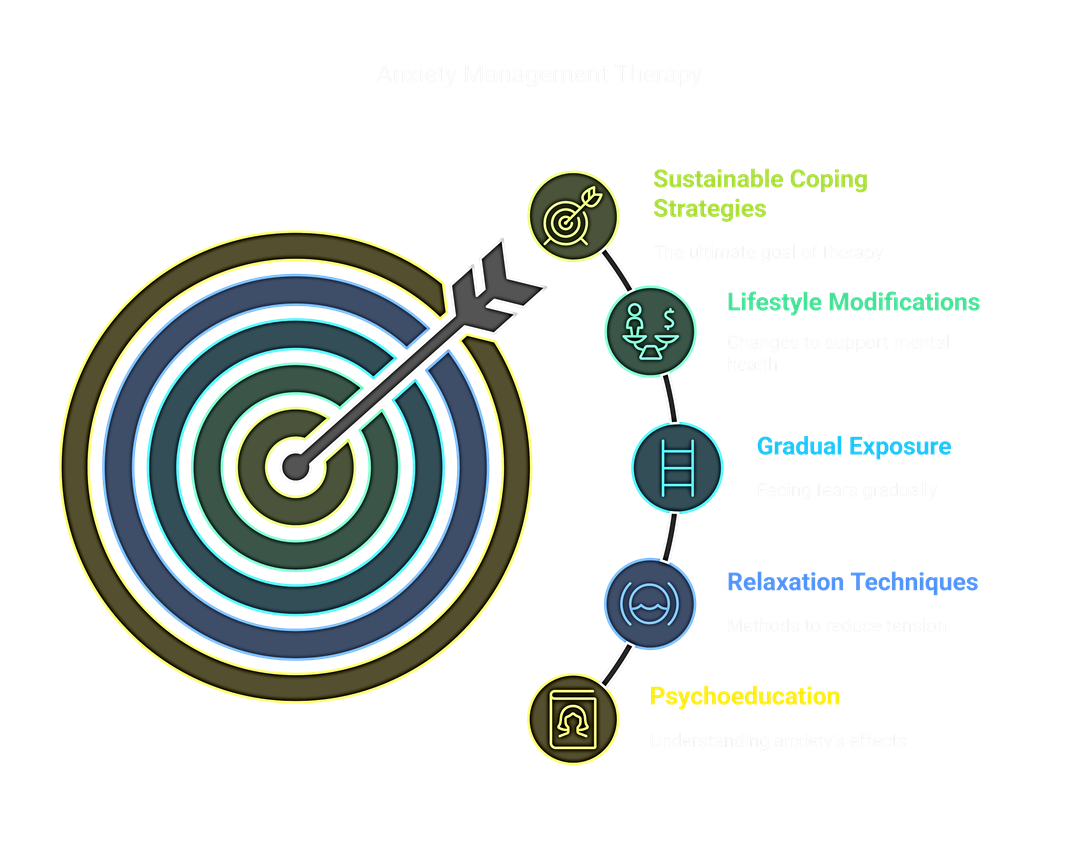
Understanding Your Anxiety: You’ll learn to recognize how anxiety affects both your body (like racing heart, sweaty palms) and your mind (like worry thoughts, feeling of doom). By becoming aware of these signs, you can catch anxiety early before it overwhelms you.
Changing Thought Patterns: Our thoughts strongly influence our feelings. For example, thinking “I’m going to fail this test and everyone will think I’m stupid” naturally leads to anxiety. In therapy, you’ll learn to question these thoughts and replace them with more realistic ones like “This test is just one assignment, and I’ve prepared as best I could.”
Relaxation Techniques: Your body can’t be relaxed and anxious at the same time. You’ll practice methods like:
- Deep breathing that signals your brain that you’re safe
- Progressive muscle relaxation where you tense and release different muscle groups
- Mindfulness, which helps you stay in the present moment instead of worrying about the future
Facing Fears Gradually: Avoiding things that make you anxious might feel better in the short term, but it actually makes anxiety stronger over time. In therapy, you’ll create a “ladder” of situations that cause anxiety, starting with easier ones and working your way up as you build confidence.
Lifestyle Changes: Simple things like getting enough sleep, cutting back on caffeine, exercising regularly, and spending time with supportive people can significantly reduce anxiety levels.
The therapists who provide this treatment might use approaches with names like Cognitive Behavioral Therapy (CBT), Acceptance and Commitment Therapy (ACT), or mindfulness-based therapies. All of these have been scientifically proven to help reduce anxiety.
Remember, the goal isn’t to eliminate anxiety completely—some anxiety is normal and even helpful. Instead, the aim is to keep anxiety at a manageable level so it doesn’t interfere with your life, relationships, and goals.
Call to make an appointment with one of our therapists: (928) 641-8131
Read About the Latest Anxiety Management Research
Contact us–We would like to hear from you.


Latest Posts:
Mental Health Counseling–Substance Abuse
Posted on May 1, 2025 Leave a Comment

Understanding Substance Abuse Counseling
Substance abuse counseling is a special type of therapy that helps people who are having problems with alcohol, drugs, or other substances. Let’s look at what this type of counseling involves and how it helps people recover.
What happens in substance abuse counseling?
Motivational interviewing
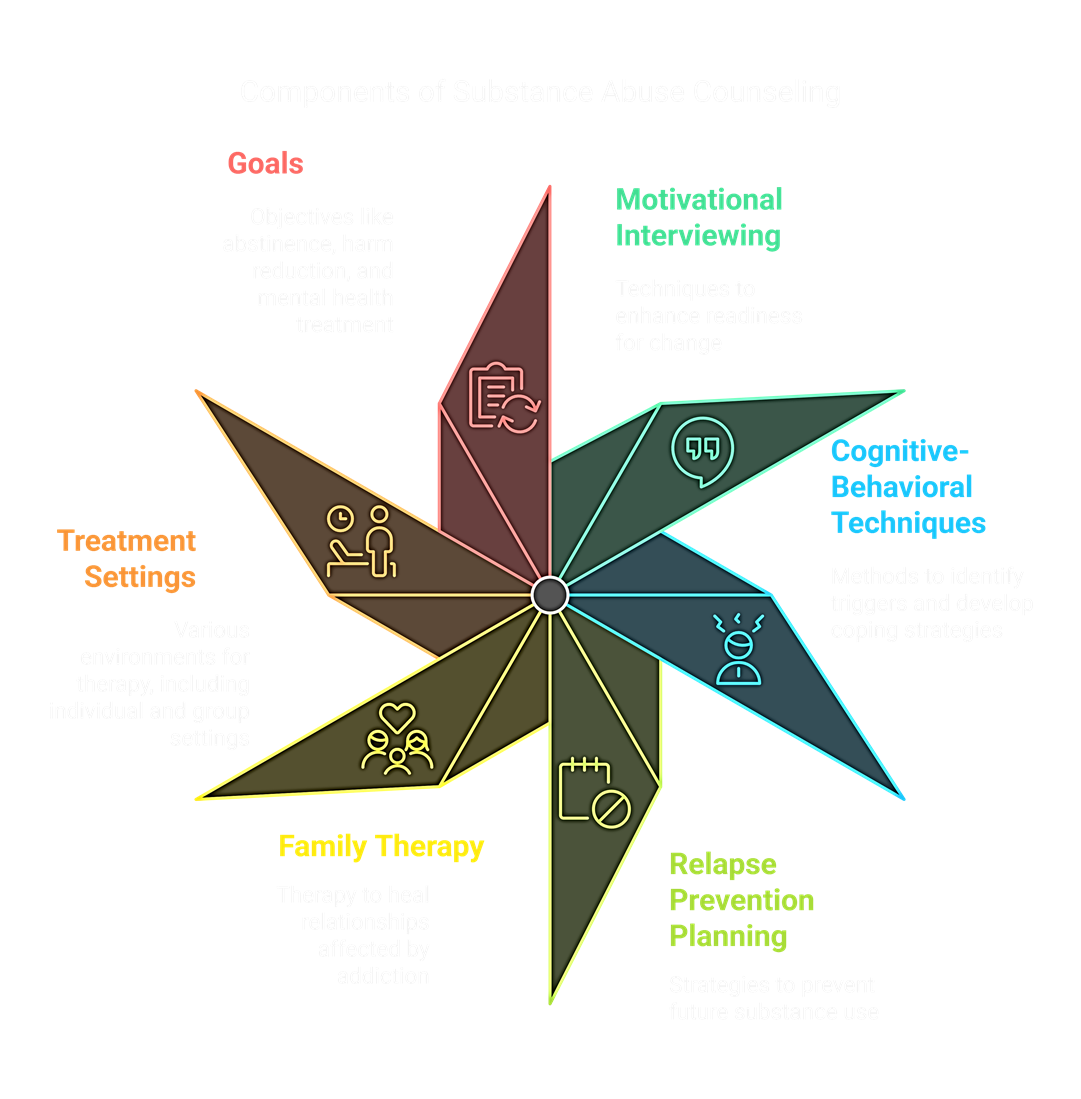
Counselors use a method called “motivational interviewing” to help people find their own reasons for wanting to change. Instead of telling someone they need to stop using substances, the counselor asks questions that help the person discover why changing might be important to them. This works better because people are more likely to stick with changes they want to make for themselves.
Learning about triggers and coping
People learn to identify their “triggers” – these are situations, feelings, people, or places that make them want to use substances. For example, someone might realize they always want to drink alcohol when they feel stressed or when they hang out with certain friends.
After identifying triggers, counselors help people develop new ways to handle these situations without using substances. For instance, someone might learn to take deep breaths when feeling stressed instead of reaching for a drink.
Planning to prevent relapse
“Relapse” means going back to using substances after trying to stop. In counseling, people make specific plans for what to do if they feel strong urges to use again. This might include:
- People to call for support
- Places to go that are substance-free
- Activities that help distract from cravings
- Reminders of why recovery is important
Family healing
Substance problems often hurt relationships with family and friends. Sometimes family members join in counseling sessions to:
- Learn about addiction and recovery
- Improve how they communicate with each other
- Rebuild trust that may have been damaged
- Learn how to support their loved one’s recovery
Where does substance abuse counseling happen?
Counseling can take place in different settings:
Outpatient programs: People live at home and attend counseling sessions a few times a week.
Intensive outpatient programs: People attend counseling several hours a day, multiple days a week, but still live at home.
Residential treatment: People stay at a treatment center for weeks or months, receiving counseling and support throughout the day.
Group counseling: Many people find it helpful to talk with others who understand what they’re going through. Groups provide support and allow people to learn from each other’s experiences.
What are the goals of substance abuse counseling?
Stopping or reducing substance use
Some people work toward complete abstinence (not using substances at all), while others focus on harm reduction (using less or in safer ways to reduce negative consequences).
Building healthier ways to cope
Many people use substances to deal with difficult feelings or situations. Counseling helps them develop healthier ways to handle stress, sadness, anger, boredom, or social situations.
Addressing mental health
Many people with substance problems also have mental health conditions like depression, anxiety, or trauma. Counseling often addresses these issues alongside substance use.
Creating support systems
Recovery works better when people have support. Counseling helps people build connections with others who support their recovery goals, which might include friends, family, support groups, or community organizations.
Substance abuse counseling recognizes that recovery is a journey that takes time, and that setbacks are normal parts of the process. The counselor’s job is to provide support, guidance, and practical tools to help people move toward healthier lives, one step at a time.
Call to make an appointment with one of our therapists: (928) 641-8131
Read about the latest research on substance-abuse counseling
Latest Posts:
Mental Health Counseling–PTSD (Post Traumatic Stress Disorder)
Posted on April 24, 2025 Leave a Comment

PTSD and How Therapy Helps
PTSD (Post-Traumatic Stress Disorder) happens when someone has gone through a scary, dangerous, or shocking event and continues to feel stressed or afraid even when they’re safe. PTSD therapy helps people recover from these traumatic experiences using methods that have been proven to work.
What happens in PTSD therapy?
Learning about trauma reactions
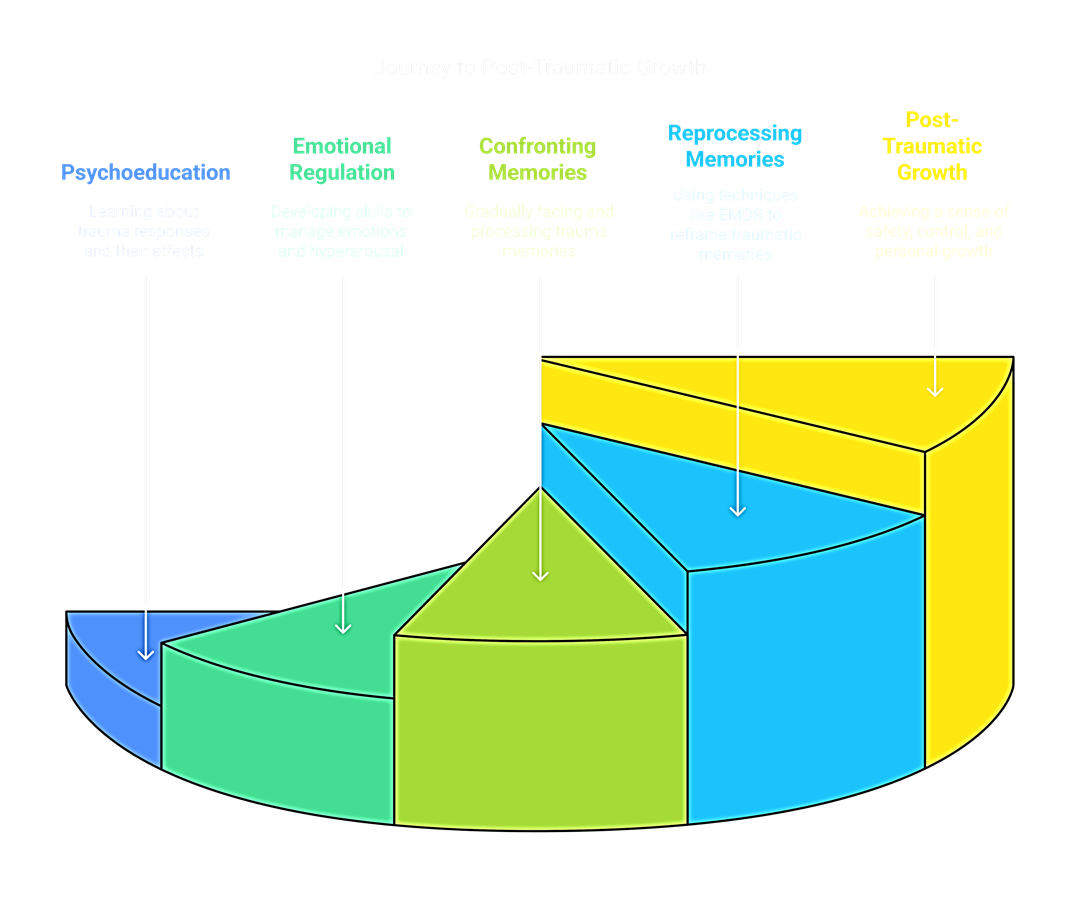
First, people learn why their bodies and minds react the way they do after trauma. This helps them understand that their reactions make sense and aren’t their fault. For example, someone might learn that being easily startled is their body’s natural way of trying to keep them safe.
Different types of therapy approaches
Cognitive Processing Therapy (CPT)
This type of therapy helps people identify and change unhelpful thoughts about their trauma. For example, someone might believe “The bad thing that happened was my fault” or “I can never be safe again.” In CPT, they learn to question these thoughts and develop more balanced beliefs.
Prolonged Exposure (PE)
In this therapy, people slowly and safely face their trauma memories and things that remind them of the trauma. At first, thinking about the trauma might feel overwhelming, but with practice and support, the memories gradually become less powerful. It’s like slowly turning down the volume on a scary song until it doesn’t feel so scary anymore.
EMDR (Eye Movement Desensitization and Reprocessing)
This special therapy has people focus on their trauma memory while following the therapist’s hand movements with their eyes or listening to sounds that alternate between their left and right ears. This helps the brain process the trauma differently. Many people find that after EMDR, their trauma memories feel more distant and less upsetting.
Learning coping skills
PTSD therapy also teaches important skills like:
- Ways to calm down when feeling anxious or panicky
- How to handle strong emotions without being overwhelmed
- How to face situations that feel scary but are actually safe
- Better ways to sleep when nightmares or worries keep you awake
Goals of PTSD therapy
The main goals of PTSD therapy are to:
- Help process trauma memories so they don’t feel as powerful or upsetting
- Restore feelings of safety and control in everyday life
- Reduce symptoms like nightmares, flashbacks, and being easily startled
- Help people move forward in their lives
Many people not only recover from PTSD but also experience what therapists call “post-traumatic growth.” This means they discover new strengths, deeper relationships, or a greater appreciation for life after working through their trauma.
Therapy doesn’t erase what happened, but it can help the trauma become just one part of someone’s life story rather than something that controls their life every day.
Call to make an appointment with one of our therapists: (928) 641-8131
Read about the latest PTSD research
Latest Posts:
Mental Health Counseling–EMDR Therapy
Posted on April 17, 2025 Leave a Comment

Understanding EMDR Therapy
EMDR therapy (which stands for Eye Movement Desensitization and Reprocessing) is a special kind of therapy that helps people heal from difficult or scary experiences that continue to bother them. Let’s explore how this therapy works and how it helps people feel better.
What is EMDR and how does it work?
When something scary or upsetting happens to us, our brains sometimes get “stuck” on the memory. In EMDR therapy, a trained therapist helps the brain “unstick” these memories so they don’t feel so painful anymore.
During EMDR, you think about the difficult memory while your eyes follow the therapist’s fingers moving back and forth, or while you listen to sounds that alternate between your left and right ears, or feel gentle taps on your hands or knees that go back and forth. This back-and-forth movement is called “bilateral stimulation.”
Doing these two things at once – thinking about the memory while experiencing the bilateral stimulation – helps your brain process the memory in a new way. It’s like your brain is saying, “I can think about this memory now and still be okay.”
Many people notice that after EMDR, the memory doesn’t go away, but it doesn’t feel as upsetting or overwhelming anymore. It starts to feel more like a regular memory rather than something that can still hurt you.
The eight steps of EMDR therapy
EMDR follows eight important steps:
- History-taking: The therapist learns about your past experiences and what’s bothering you now.
- Preparation: The therapist teaches you ways to feel calm and safe, like deep breathing or imagining a peaceful place.
- Assessment: You identify specific memories to work on and describe how they make you feel.
- Desensitization: This is when you focus on the memory while doing the eye movements or other bilateral stimulation. During this step, your feelings about the memory often begin to change.
- Installation: The therapist helps you connect positive thoughts to the memory, like “I am safe now” or “I can handle this.”
- Body scan: You notice if there are any uncomfortable feelings still in your body when you think about the memory.
- Closure: The therapist makes sure you feel okay at the end of each session, even if the work isn’t finished yet.
- Reevaluation: At the beginning of the next session, the therapist checks how you’re feeling about the memories you worked on before.
What can EMDR help with?
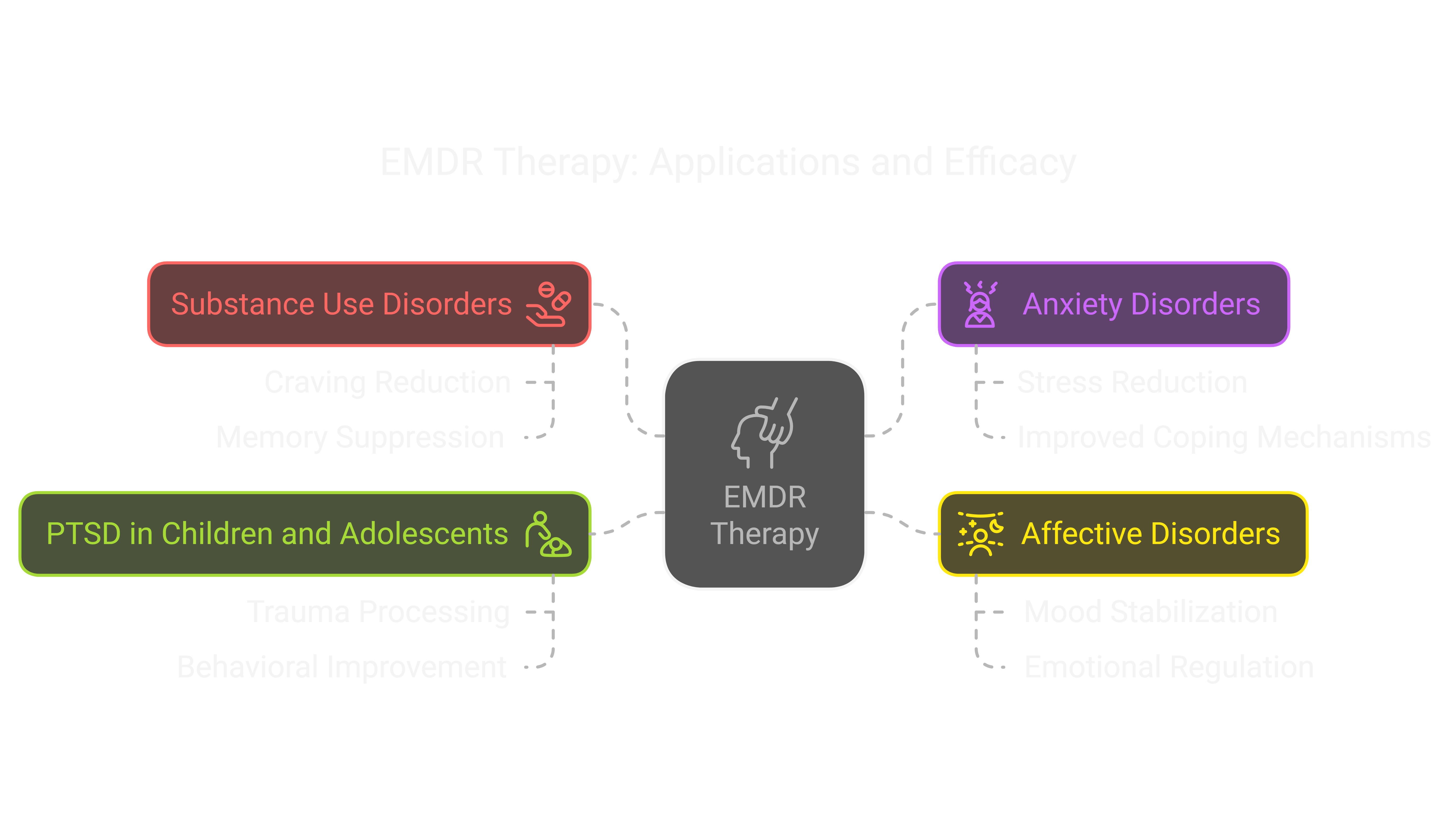
EMDR was first created to help people with PTSD (Post-Traumatic Stress Disorder), which happens after very scary or dangerous experiences. But now therapists use EMDR to help with many other problems, including:
- Feeling worried or anxious a lot of the time
- Feeling sad or depressed
- Being very afraid of specific things (phobias)
- Having unwanted thoughts that keep coming back
- Feeling bad about yourself
How well does EMDR work?
Research shows that EMDR helps many people feel better, often with fewer therapy sessions than other types of therapy might need. Many people notice changes within a few sessions, though the number of sessions needed depends on each person’s situation.
EMDR doesn’t erase memories, but it helps change how those memories make you feel. After EMDR, many people can think about difficult past experiences without feeling overwhelmed or upset like they used to.
The goal of EMDR is to help you process past experiences in a way that lets you move forward in your life feeling stronger and more peaceful.
Call to make an appointment with one of our therapists: (928) 641-8131
Read about the latest EMDR research
Latest Posts:
Mental Health Counseling–Dialectical Behavioral Therapy
Posted on April 10, 2025 Leave a Comment

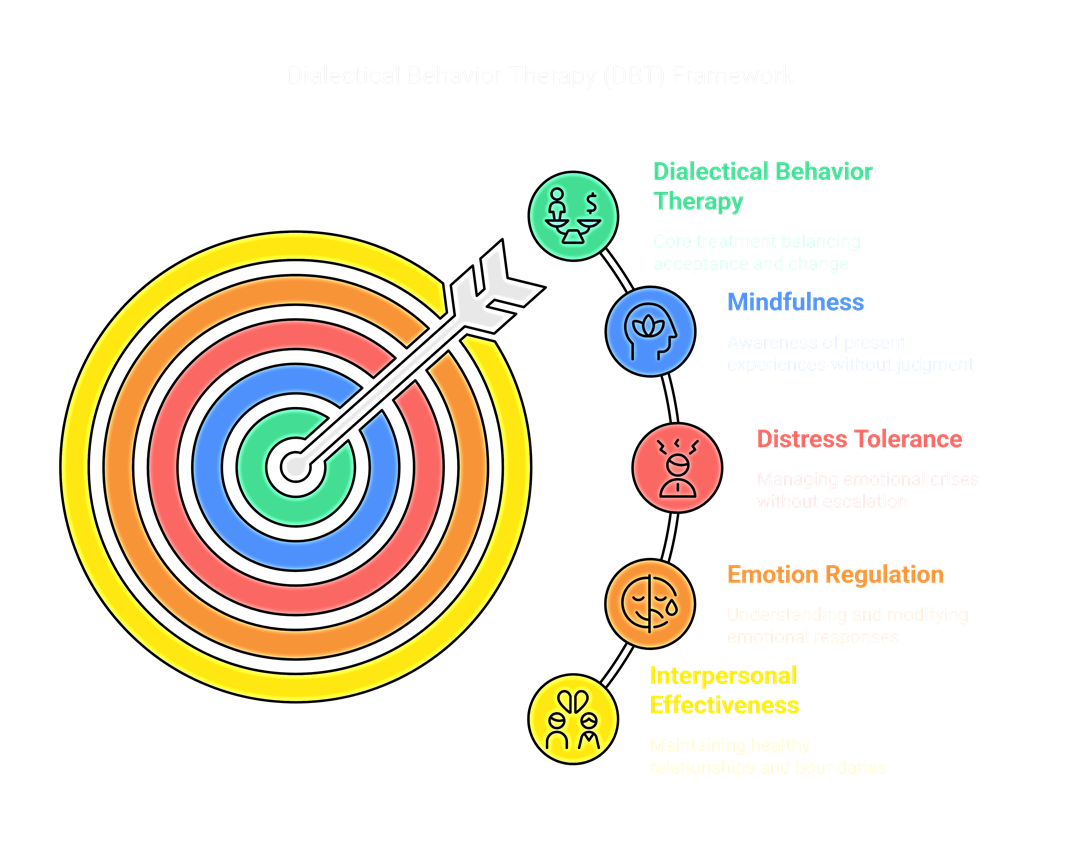
What is Dialectical Behavior Therapy (DBT)?
Dialectical Behavior Therapy (DBT) is a special kind of therapy that helps people manage strong emotions and improve their relationships. The word “dialectical” means balancing two ideas that seem opposite – in DBT, this means accepting yourself while also working to change.
Who uses DBT?
DBT was first created to help people with borderline personality disorder, but now it helps many people who struggle with controlling their emotions, including those with:
-Depression
-Anxiety
-Eating disorders
-Substance use problems
-Self-harm behaviors
The four main skills in DBT
1. Mindfulness
Mindfulness teaches you to pay attention to what’s happening right now without judging it as “good” or “bad.” It’s like learning to be a friendly observer of your own thoughts and feelings.
For example, instead of thinking “I’m having the worst day ever!” you might notice “I’m feeling frustrated right now, and that’s okay.”
2. Distress Tolerance
These skills help you get through difficult situations without making them worse. It’s like learning what to do when your emotions feel like a storm.
For instance, if you’re very upset, you might:
-Hold an ice cube in your hand to focus on a different sensation
-Count backward from 100
-Take a short walk
-Practice deep breathing
3. Emotion Regulation
These skills help you understand, experience, and change your emotions. You learn:
-How emotions work in your body and mind
-How to identify what you’re feeling
-Ways to reduce painful emotions
-How to increase positive emotions
4. Interpersonal Effectiveness
These skills help you communicate better with others. You learn how to:
-Ask for what you need
-Say no when necessary
-Keep your self-respect during conflicts
-Keep relationships healthy while still respecting your own boundaries
How DBT therapy works
A full DBT program usually includes:
Individual therapy – Meeting one-on-one with a therapist who helps you apply DBT skills to your specific problems
Skills training groups – Learning DBT skills with other people in a class-like setting
Phone coaching – Getting help from your therapist between sessions when you’re facing a crisis
Therapist consultation team – Your therapist meets with other DBT therapists to make sure they’re providing the best care
The special DBT balance
The most important idea in DBT is the balance between two things that seem opposite:
-Accepting yourself exactly as you are right now
-Working to change behaviors that cause problems in your life
This balance helps people stop seeing things as all-or-nothing and find a middle path forward. For example, you can think “I’m doing the best I can AND I can learn to do better.”
Call to make an appointment with one of our therapists: (928) 641-8131
Read about the latest DBT research
Latest Posts:
Mental Health Counseling–Depression Management
Posted on April 3, 2025 Leave a Comment

How to Manage Depression
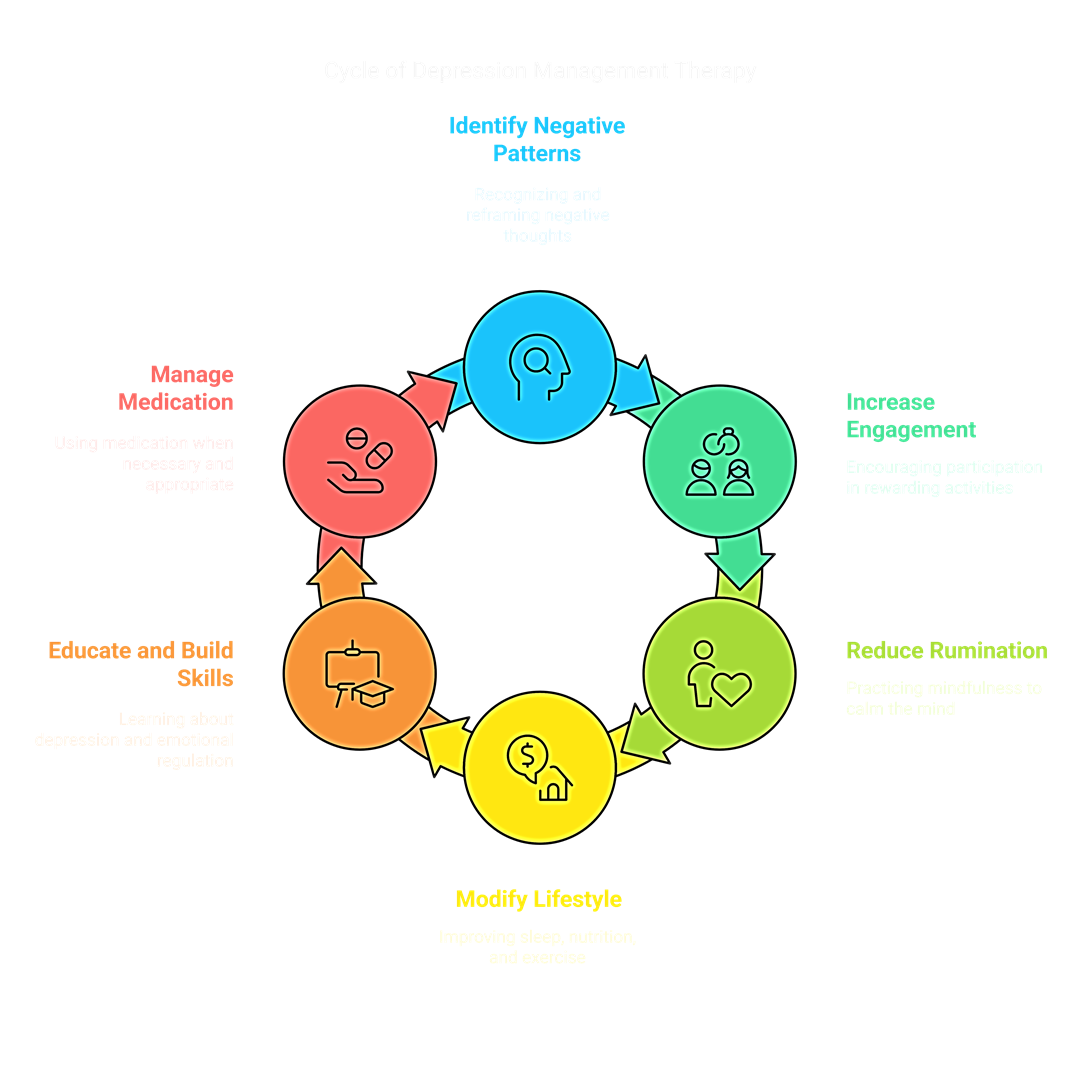
Depression management therapy helps people feel better when they’re feeling very sad for a long time. This type of therapy uses several different methods to reduce depression symptoms and stop them from coming back.
What happens in depression management therapy?
Changing how you think
Depression often makes people think in very negative ways. In therapy, you learn to notice these negative thoughts and change them to be more helpful and realistic. For example, if you think “I’ll never get better,” you might learn to replace that with “I’m having a hard time right now, but I can take small steps toward feeling better.”
Getting active again
Depression often makes people stop doing things they used to enjoy. In therapy, you work on slowly getting back to activities that make you feel good or give you a sense of accomplishment. Even small activities like taking a short walk or calling a friend can help your mood improve.
Learning to be in the present moment
People with depression often spend a lot of time thinking about sad things from the past or worrying about the future. Mindfulness teaches you how to focus on the present moment instead of getting caught in these unhelpful thought patterns.
Taking care of your body
Depression affects both your mind and body. That’s why therapy often includes making changes to help you:
-Sleep better at night
-Eat healthier foods
-Get some exercise, even if it’s just a little bit each day
Understanding depression
Learning about how depression works helps you recognize what’s happening in your brain and body. This knowledge makes it easier to manage your symptoms and not blame yourself.
Building emotional skills
In therapy, you learn ways to handle difficult emotions without being overwhelmed by them. These skills help you both during depression and after you start feeling better.
Medication (sometimes)
For some people, the therapist might suggest talking to a doctor about medication that can help with depression symptoms. This works alongside the other parts of therapy.
Types of depression therapy
There are several proven approaches to treating depression, including:
-Cognitive Behavioral Therapy (CBT), which focuses on changing thinking patterns
-Acceptance and Commitment Therapy (ACT), which helps you accept difficult feelings while still taking positive actions
-Interpersonal Therapy, which helps improve your relationships with others
The goal of depression management
The main purpose of depression management is to help you feel better now while also giving you tools to stay emotionally healthy in the future. You learn skills that can prevent depression from coming back or help you manage it more effectively if it does return.
Call to make an appointment with one of our therapists: (928) 641-8131
Read about the latest depression research.
Latest Posts:
Mental Health Counseling–Couples Therapy
Posted on March 27, 2025 Leave a Comment

What is Couples Therapy?
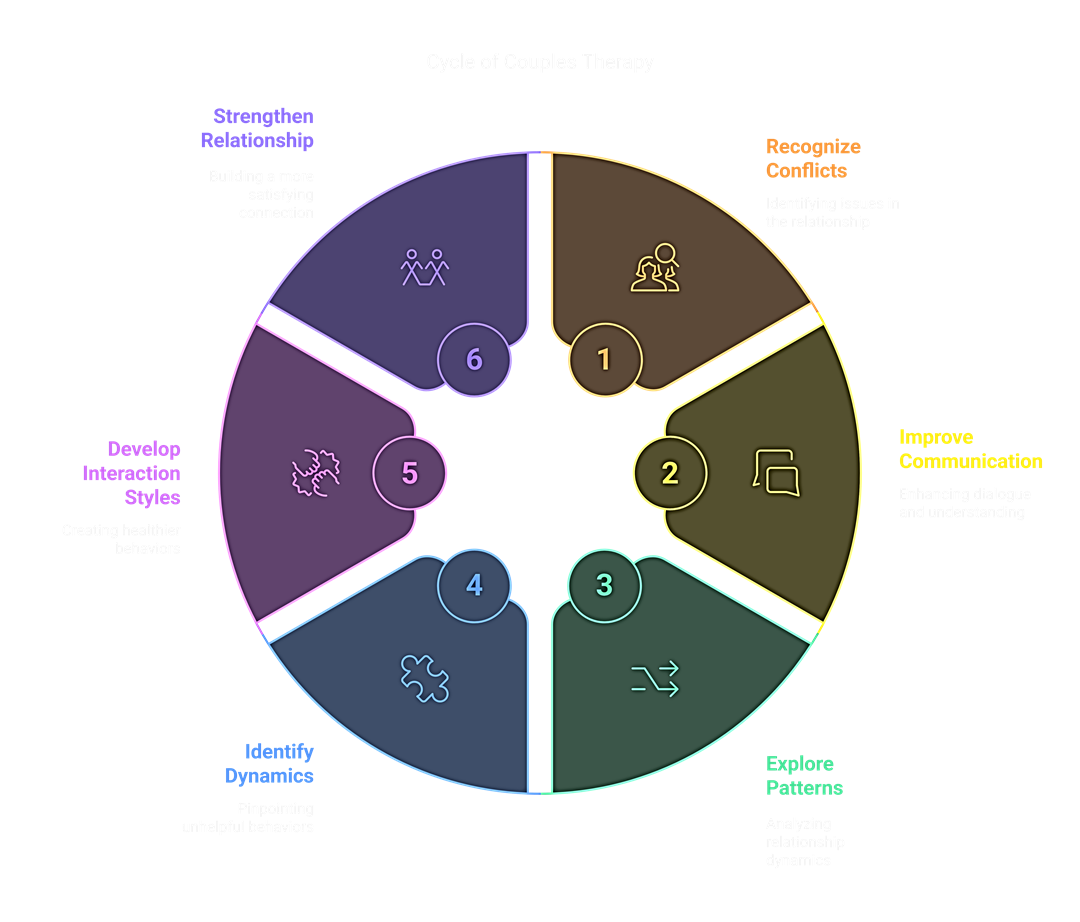
Couples therapy helps people in relationships work out their problems together. A special kind of counselor creates a safe space where both partners can talk about what’s bothering them.
What happens in couples therapy?
In couples therapy, partners learn to:
– Talk to each other better
– Understand why they keep having the same arguments
-Find better ways to solve problems together
-Feel happier in their relationship
Different kinds of couples therapy
Therapists use different methods to help couples:
Emotionally Focused Therapy (EFT) looks at how partners connect to each other. It helps them understand their feelings and needs better.
The Gottman Method teaches specific skills that make relationships stronger, like how to handle disagreements without hurting each other.
Imago Relationship Therapy helps partners see how things from their childhood might be affecting their relationship now.
How long does couples therapy take?
Some couples only need a few sessions to fix a specific problem. Others might go to therapy for many months to work on deeper issues.
What is the goal?
The main goal of couples therapy is to help the relationship become healthier. Sometimes couples decide to stay together after therapy, and sometimes they decide to break up. The therapist doesn’t try to force couples to stay together – they just help partners figure out what’s best for them.
Call to make an appointment with one of our therapists: (928) 641-8131
Latest Posts:
Mental Health Counseling–Cognitive Behavioral Therapy (CBT)
Posted on March 20, 2025 Leave a Comment
What It Is
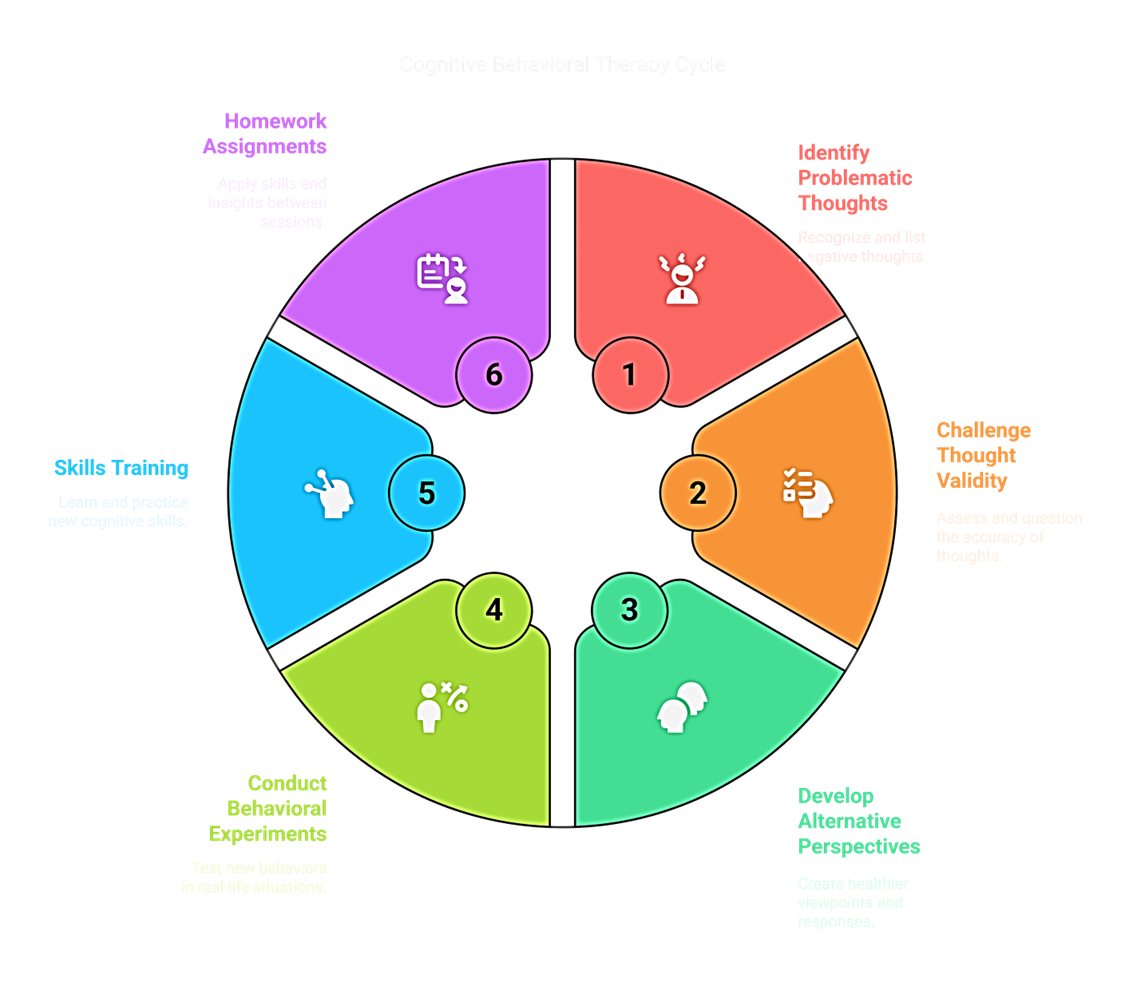
CBT is a type of therapy that helps you understand how your thoughts, feelings, and actions are connected to each other. It’s like learning to be a detective of your own mind. You discover patterns in your thinking that might be making you feel bad, and then learn how to change those thoughts to healthier ones.
How It Works
When you work with a CBT counselor at Mariposa, you’ll learn important skills:
First, you’ll learn to notice negative thoughts when they happen. These might be thoughts like “I always mess everything up” or “Nobody likes me.”
Then, you’ll learn to question these thoughts by looking for real evidence. Is it really true that you “always” mess up? Or are there times when things went well?
Next, you’ll practice replacing unhelpful thoughts with more balanced ones that are still true but less extreme.
Finally, you’ll try new behaviors that help break the cycle of negative thoughts and feelings. These might be small steps at first, like talking to one new person if you’re shy.
What to Expect
CBT is different from some other therapies because it focuses mostly on what’s happening in your life right now, not just on your past. Your counselor will work with you like a coach, giving you exercises to practice between sessions.
You won’t need to come to therapy forever. CBT usually has clear goals and a timeline—often between 8 to 20 sessions. Your counselor will help you learn skills you can use on your own after therapy ends.
What It Helps With
CBT has been proven to help with many different problems, including:
Depression (feeling very sad or hopeless) Anxiety (feeling very worried or afraid) Recovering from traumatic experiences Obsessive thoughts or behaviors that you can’t control Problems with substance use
At Mariposa Counseling, we believe everyone has the power to make positive changes in their thinking and their lives. Just like a butterfly transforms, you too can transform how you think and feel with the right support and tools.
Call us at (928) 641-8131 to learn more about how CBT might help you or someone you care about.
Call to make an appointment with one of our therapists: (928) 641-8131
Read about the latest CBT research.
Latest Posts:
 Mariposa Counseling Services LLC